
Keyword Research for Content Creation: Matching Topics to Searches
Turn Google searches into content that magnetizes, not manipulates.
Keyword research isn’t about tricking the algorithm—it’s about tuning into the questions, curiosities, and calls for help your audience is already typing into the search bar. When done with intention, keyword research becomes the foundation of your content strategy—connecting meaningful messages with the people who are actively seeking them.
In this guide, we’ll show you exactly how to align your content topics with real searches so you can:
- Rank higher in search results
- Attract aligned visitors organically
- Create valuable content that actually gets read
Let’s magnetize your content strategy.

Why Keyword Research is Non-Negotiable for Magnetic Content
In the world of magnetizing marketing, keyword research isn’t just a technical task—it’s an energetic alignment practice.
Your dream audience is out there searching. They’re Googling questions, challenges, and desires every day. Keyword research helps you meet them exactly where they are, with content that speaks to their experience.
When you skip keyword research, you risk creating content that sounds good but doesn’t get seen. It might be soulful, beautiful, and wise—but without visibility, your message can’t ripple out into the world.
What Is Keyword Research in Content Planning?
Keyword research for content planning is the activity of determining the exact words, questions, and phrases that your target audience types into search engines, and then leveraging those insights to generate intentional, high-impact content.
This guarantees that your information isn’t just “out there”—it’s visible in the right locations, at the right time, and to the right people.
Consider it as a matchmaker between:
What your audience needs.
What your business offers.
And how can search engines connect the dots.
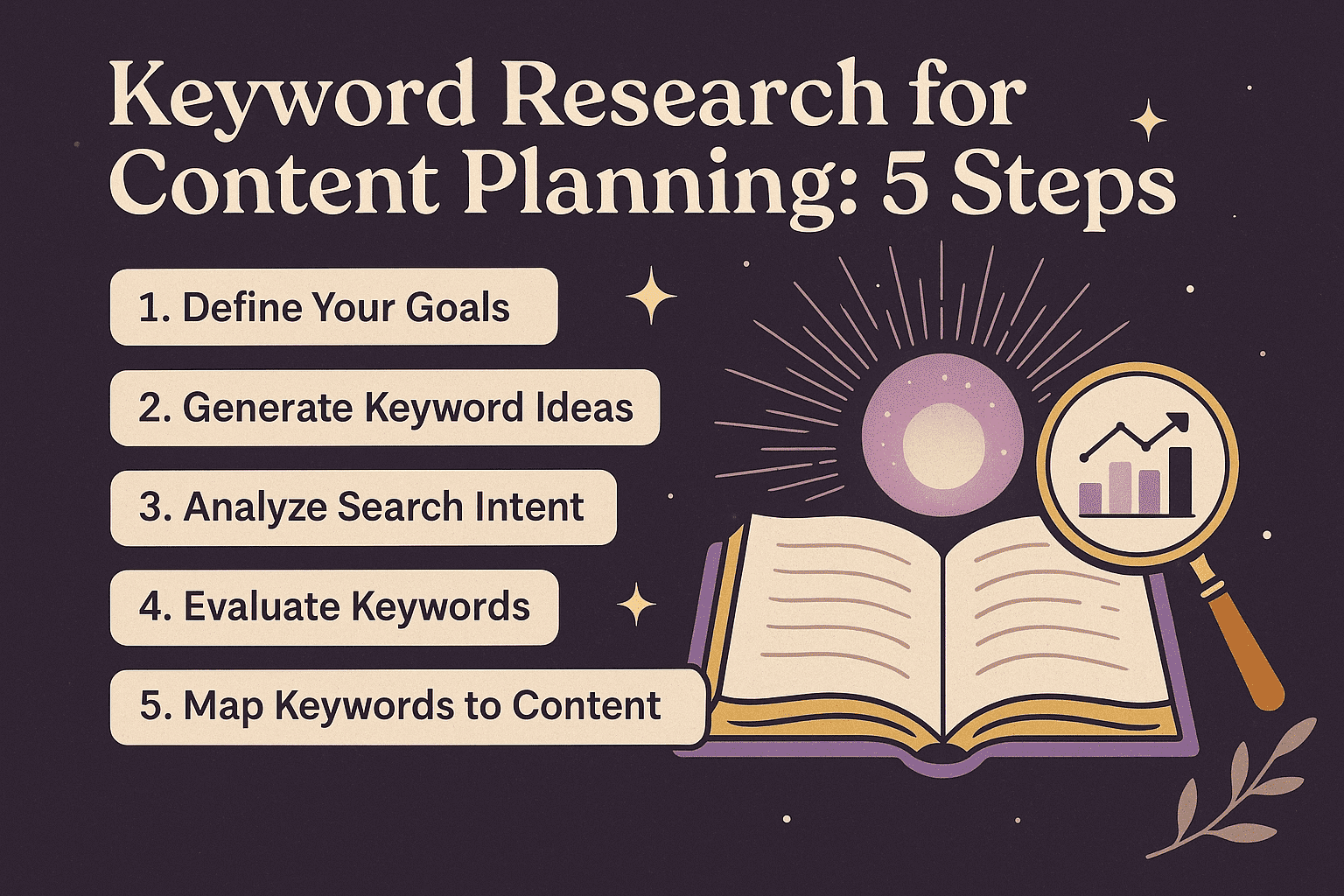
Step-by-Step: The Content Planning Process (Powered by Keyword Research)
Step 1: Discover What Your People Are Actually Searching
Keyword research starts with listening.
Before you write a single word, you need to tap into the pulse of your audience. What are they Googling? What keeps them up at night? What solutions are they already trying to find?
Tools to Use:
- Google Keyword Planner (free with a Google Ads account)
- Ubersuggest (great for small businesses)
- AnswerThePublic (visualize questions and prepositions)
- AlsoAsked.com (shows follow-up search queries)
- Semrush, Ahrefs or Moz (advanced)
Start With These Types of Keywords:
- Seed Keywords (e.g. “content marketing”)
- Question Keywords (e.g. “how to do keyword research for content”)
- Long-Tail Keywords (e.g. “what is keyword research and why is it important for blog posts”)
Step 2: Distill Aligned and High-Opportunity Keywords
Not every keyword is worth your time.
After compiling a long list of keyword ideas, your next step is to filter for the sweet spot:
The Keyword Sweet Spot:
- High Intent: The keyword matches what you offer and how you help
- Medium Competition: You’re more likely to rank without needing thousands of backlinks
- Sufficient Volume: At least 100+ monthly searches (depending on your niche)
Ask yourself: Does this keyword match a real need? Can I create content that truly serves this search?
This is where your brand voice meets strategic insight.
Step 3: Design Content Around Search Intent
Every keyword carries an intention.
When someone types “what is keyword research and how to do it for content,” they’re probably looking for a beginner-friendly guide (like this one). But if they search “best keyword research tools for SEO,” they want a product comparison.
Map Keyword to Content Type:
- Informational Keywords → Blog posts, guides, explainers
- Navigational Keywords → Landing pages, about pages, directory listings
- Transactional Keywords → Sales pages, service pages, conversion-optimized posts
- Commercial Investigation → Listicles, comparison posts, testimonials
Your content will perform best when it fulfills the searcher’s intent fully and clearly.
Pro Tip: Type your keyword into Google and study the top 3 results. What formats are ranking? Match them—then go deeper.
Step 4: Develop Magnetic Content That Ranks AND Resonates
Now it’s time to write. But don’t write for Google.
Write for the person on the other side of the screen—the one searching for support.
Magnetizing Content Checklist:
- Use the keyword naturally in your title, URL, meta description, H1, intro, and subheads
- Answer the question quickly, then expand with value-rich detail
- Use short paragraphs, bolding, bullet points for skimmability
- Add internal links to relevant pages on your site
- Include calls to action aligned with the reader’s stage
Use storytelling, examples, and your unique brand voice to breathe life into your content.
Remember: Helpful, people-first content is what Google wants. (And it’s what your audience wants, too.)
Step 5: Distribute and Repurpose Like a Pro
The biggest content myth? “If you publish it, they will come.”
Even the best SEO-optimized content needs amplification. Once your post is live:
Repurposing Ideas:
- Pull a quote or stat into an Instagram carousel
- Turn the key insights into a LinkedIn article
- Record a reel or short video explaining the process
- Create a Pinterest infographic with the “Keyword-Driven Content Planning” spiral
- Send a value-packed email to your list
Your content is a seed. Give it sunlight, water, and visibility.
Pro Tip for Featured Snippets: Answer questions directly.
To get the coveted “position zero” on Google, prepare content with clear headers and direct responses.
Example:
What is keyword research in content planning?
Keyword research for content planning is the process of identifying high-intent search phrases used by your target audience and developing strategic content around those terms to increase exposure, relevance, and organic traffic.
Why Your Content Planning Process Must Begin with Keyword Research
Content without a keyword strategy is like constructing a gorgeous store in the middle of the desert: no signage, no directions, and no foot traffic.
Here is what keyword-driven content planning enables:
✅ Ensure consistent organic visibility by ranking in Google for popular search phrases.
✅ Strategic Alignment: Create content that aligns with your offers and addresses people’s decision journeys.
✅ Time-saving Clarity: You won’t have to ponder what to post or write next; instead, you’ll have a clear plan.
It is not about following trends. It is about creating content with purpose—and traction.
Ready to Plan Keyword-Driven Content That Connects and Converts?
Keyword research is more than SEO.
It’s an act of alignment. A bridge between what you offer and what people are already looking for. It helps you share your medicine with those actively searching for it.
So next time you sit down to create content, don’t start with what you want to say. Start with what they need to hear.
And then meet them there—with strategy, soul, and search-friendly structure.
Your Questions Answered: Keyword Research for Content Creation and the Content Planning Process
1. What is keyword research?
Keyword research is the process of identifying and analyzing the words and phrases people use when searching online. It helps businesses understand user intent, optimize content, and improve search engine rankings.
2. Why is keyword research important for content planning?
Keyword research is vital for content planning because it ensures your content aligns with what users are searching for, helping to increase visibility, drive organic traffic, and meet audience needs.
3. What are the types of keywords?
The main types of keywords are:
- Short-tail keywords: Broad terms with high search volume but low conversion rates.
- Long-tail keywords: More specific phrases with lower search volume but higher conversion rates.
4. How do I conduct keyword research?
To conduct keyword research:
- Define your goals.
- Brainstorm seed keywords.
- Use keyword research tools like Google Keyword Planner.
- Analyze search volume and competition.
- Select keywords that align with your goals.
5. What is content planning?
Content planning is the process of strategizing and organizing the creation, publication, and promotion of content to meet business goals and audience needs.
6. How does keyword research integrate into content planning?
Keyword research informs content planning by identifying popular topics that match search queries, helping you create relevant content that aligns with user intent and supports SEO goals.
7. How do I begin keyword research for my content planning process?
Begin with a list of seed ideas, then utilize tools such as Google Keyword Planner to seek for related questions and search intent relevant to your business.
8. What is the difference between content strategy and content planning?
Content strategy is your overall vision (why, who, and what), whereas content planning is the implementation (when, how, and where you publish).
9. What tools can assist in keyword research for content planning?
Some popular keyword research tools include:
- Google Keyword Planner
- Ahrefs
- SEMrush
- Ubersuggest
10. How often should I update my keyword strategy?
You should update your keyword strategy every 3 to 6 months to stay aligned with changing search trends and audience behaviors.
11. What are common mistakes to avoid in content planning?
Common mistakes include:
- Ignoring user intent
- Overlooking long-tail keywords
- Keyword stuffing
12. How can I measure the success of my keyword strategy?
The success of your keyword strategy can be measured by tracking:
- Organic traffic growth
- Keyword ranking improvements
- Conversion rate increases
About the Author: Laura Born


